🎓 When a summative becomes a lesson in leadership
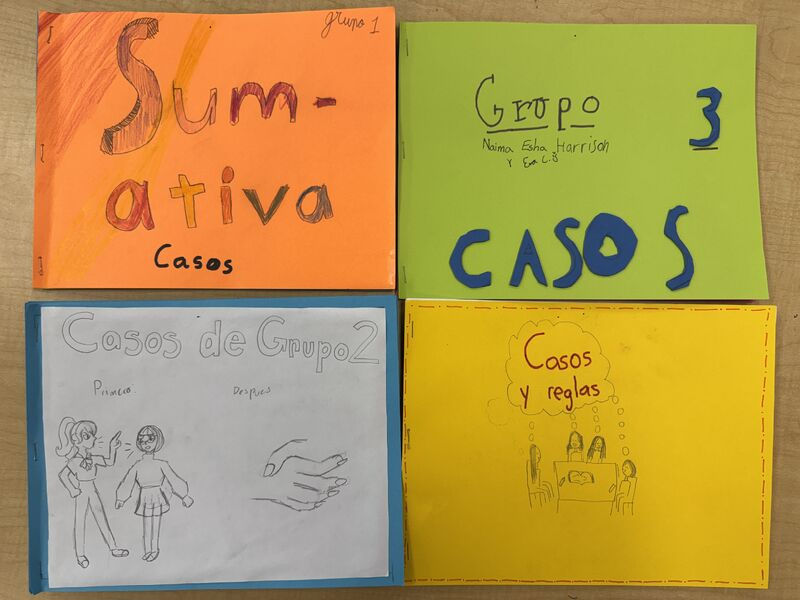
A couple of months ago, during Unit 4, my teammates and I made a decision about the summative assessment that I couldn’t be happier with.
Instead of focusing only on content, we decided the summative would revolve around:
🤝 Teamwork
🧭 Leadership
⚖️ Decision-making
👥 During the unit, students worked in groups of four. These groups stayed together throughout the entire unit.
Earlier in the unit they had already:
• Created their own group agreements
• Set a shared goal for the team
• Defined an individual goal about how they wanted to improve as collaborators (If you’re curious about this process, I explained it in a previous post about how we explicitly teach social skills and teamwork in Unit 4.)
📚 For the summative, we introduced students to a hierarchy of rules:
1️⃣ A simplified version of the Student Handbook
2️⃣ Our class essential agreements
3️⃣ Their group rules
Alongside these, students also had to consider something even deeper: 💭 their personal values.
The internal compass that helps us decide what is right and wrong.
⚖️ Then we presented 10 different conflict scenarios. Students had to analyze and solve them using the rule hierarchy. The structure looked like this:
🟢 Cases 1–3. Simple situations that students could usually solve themselves.
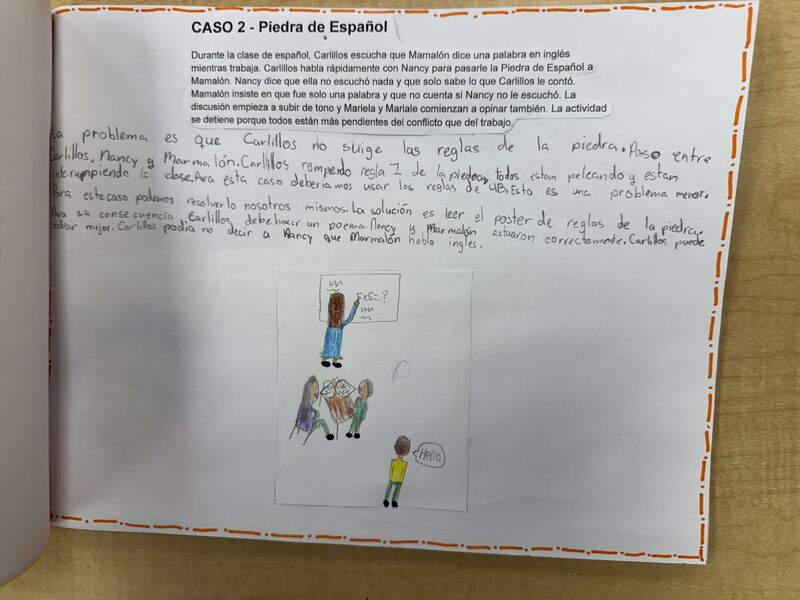
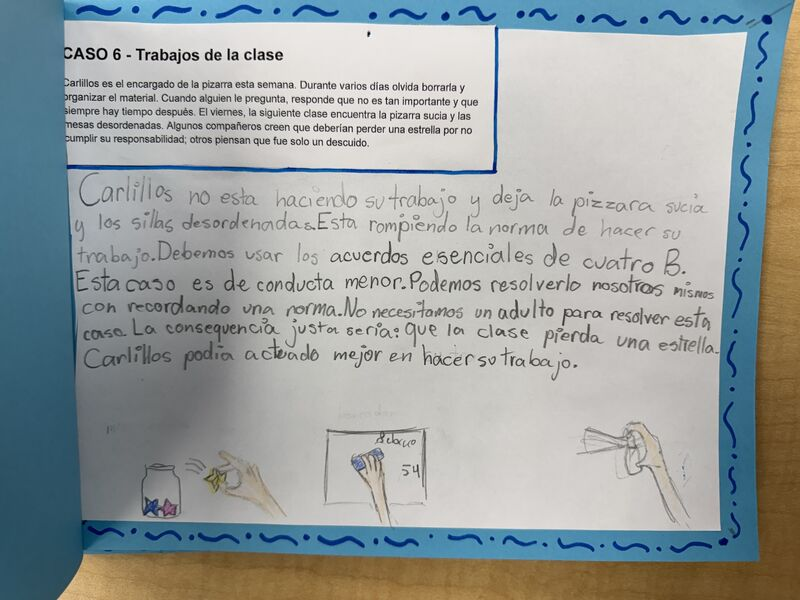
🟡 Cases 4–6. Moderate situations that required deeper discussion.
🔴 Cases 7–9. More serious cases that could potentially require adult intervention.
⭐ Case 10. Mandatory for everyone and designed to challenge students’ values and ethical thinking.
🔎 To solve each case, students had to follow a structured reasoning process:
• What is the real conflict?
• Which rule applies first and why?
• What type of behavior is this: minor, moderate, or serious according to the rules?
• Can students solve it themselves?
• Do we need an adult?
• What would be a fair resolution?
👩⚖️ The result was fascinating.
Students approached the activity almost like lawyers.
They debated.
They negotiated.
They justified their reasoning.
At the same time they were:
📘 Revisiting school rules
🏫 Reflecting on class agreements
🤝 Practicing conflict resolution
🌱 One of the most interesting moments was when students realized something important:
Some conflicts can be solved by students themselves through dialogue and responsibility.
But other situations require adult mediation, whether from a teacher, counselor, or school leadership.
Understanding when each is needed is a key life skill.
✨ For me, this summative became much more than an assessment.
It became a real opportunity to develop:
🧠 Critical thinking
🤝 Collaboration
⚖️ Ethical reasoning
🌱 Student agency
Sometimes the most powerful assessments are not the ones where students produce the most polished product.
They are the ones where students learn how communities actually work.
💬 How do you teach conflict resolution and decision-making in your classroom?