

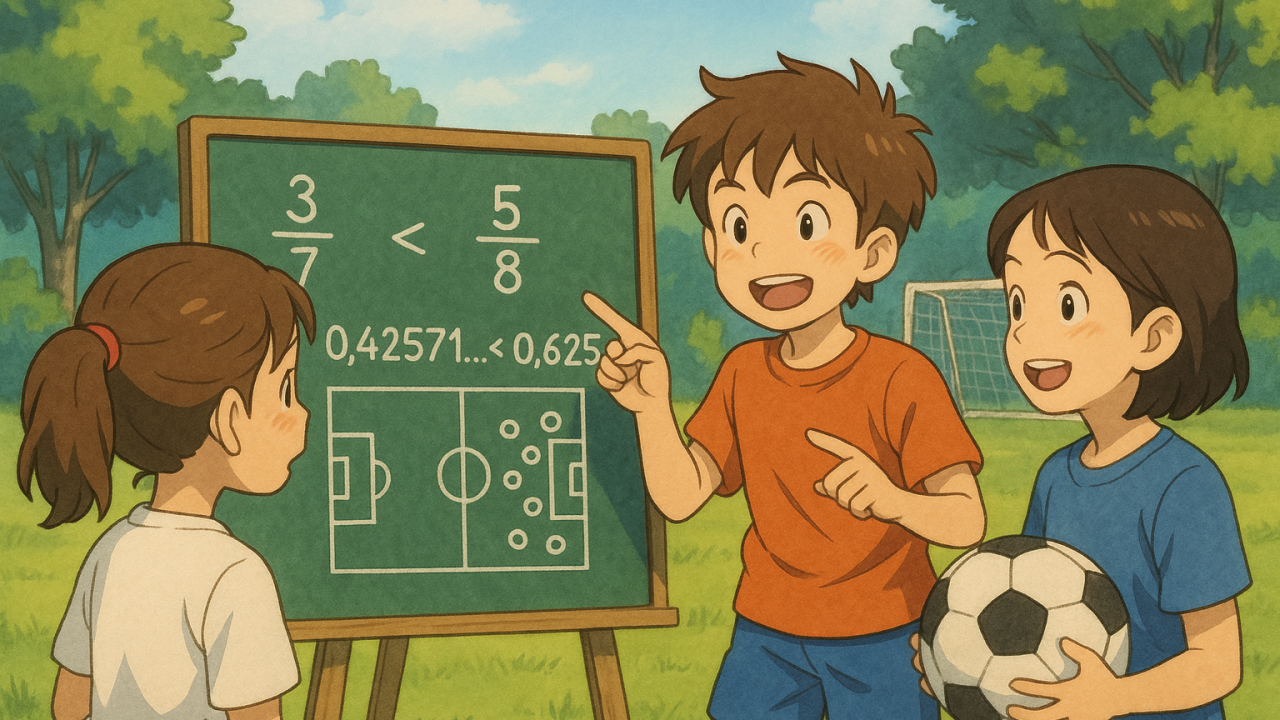
Everyone who knows me well knows that I love sports. Any sport works for me: I’ve played football since I was a child, practiced taekwondo, athletics, swimming, muay thai, Brazilian jiu-jitsu, MMA, archery, Gaelic football, surfing, sailing, and diving—and I love cycling too. Since moving to the United States, one of my students, Karac, has been teaching me how to play American football, especially how to throw the “ball” (which, let’s be honest, is not exactly a ball but an oval). Sports are my passion, and honestly, I’d find it hard to live without them.
In this post, I share how I turned my math classes into football matches, a Gaelic-football-inspired game, and basketball free throws.This idea was born thanks to my friend and former colleague Korab Maloku .
Football or Gaelic football matches
I divide students into four teams: A, B, C, and D. While A and B play, C and D observe. Then they switch roles. The observing teams collect real data to create player and team statistics.
Example:
First match:Team A vs. Team B
- Team C observes Team A
- Team D observes Team B
Second match:Team C vs. Team D
- Team A observes Team C
- Team B observes Team D
Each group creates a table (paper or digital) to record the data they want to track.
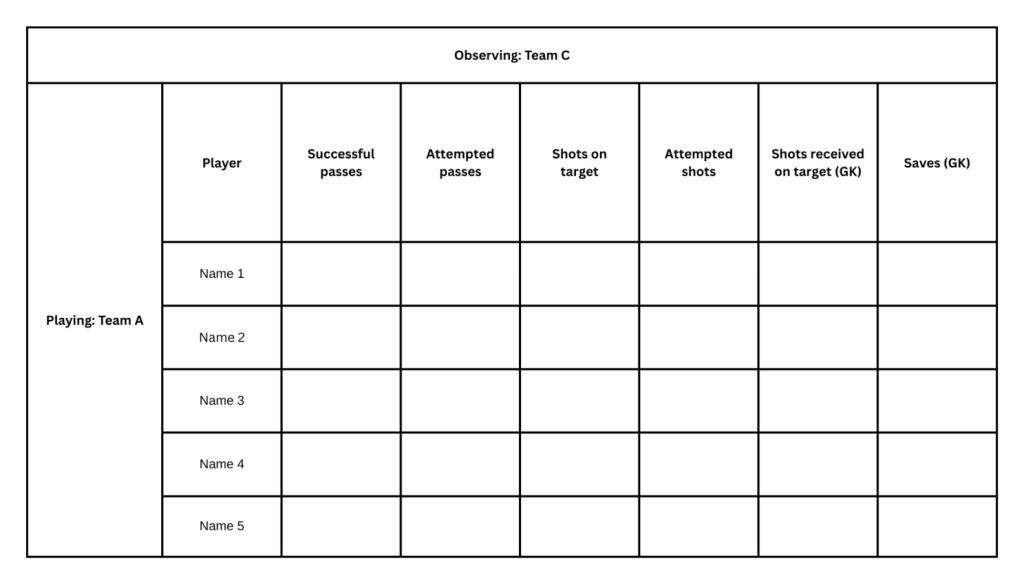
Examples of data
Students usually record simple stats like:
- Total number of passes.
- Successful vs. unsuccessful passes.
- Total shots and shots on target.
- For goalkeepers: shots received and shots saved.
These can be linked to the math concept being studied: whole numbers, fractions, ratios, or percentages.
These can be linked to the math concept being studied: whole numbers, fractions, ratios, or percentages.
Use whole numbers for counting.
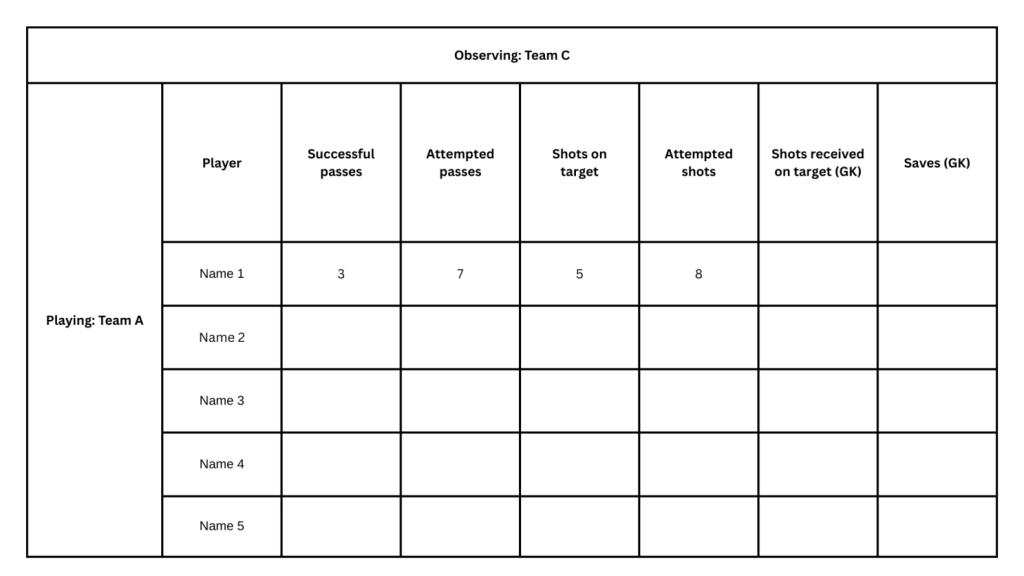
- Convert results into fractions (successful passes/total passes).
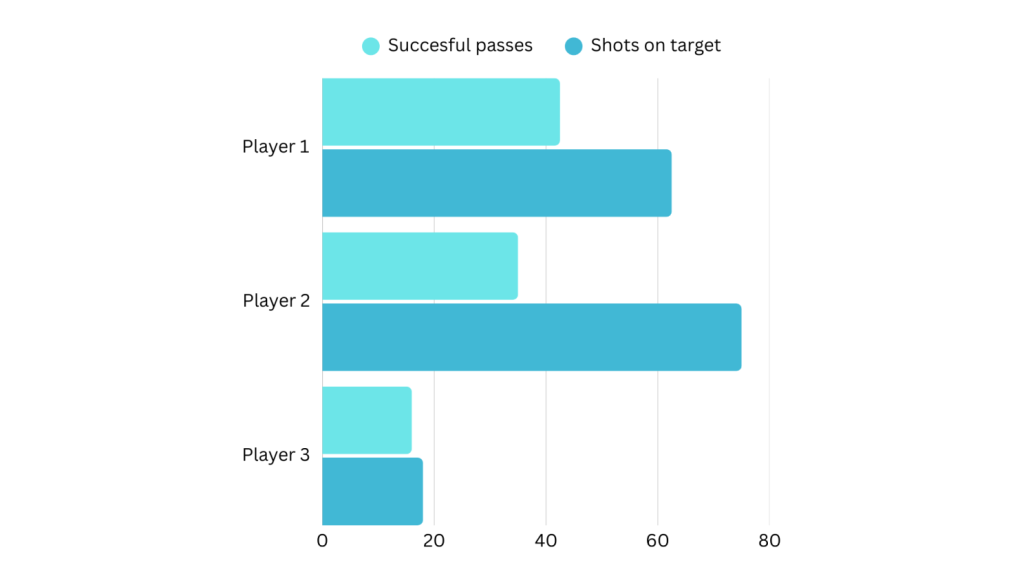
- Use percentages to visualize accuracy.
- Combine data from different players to add fractions with different denominators.
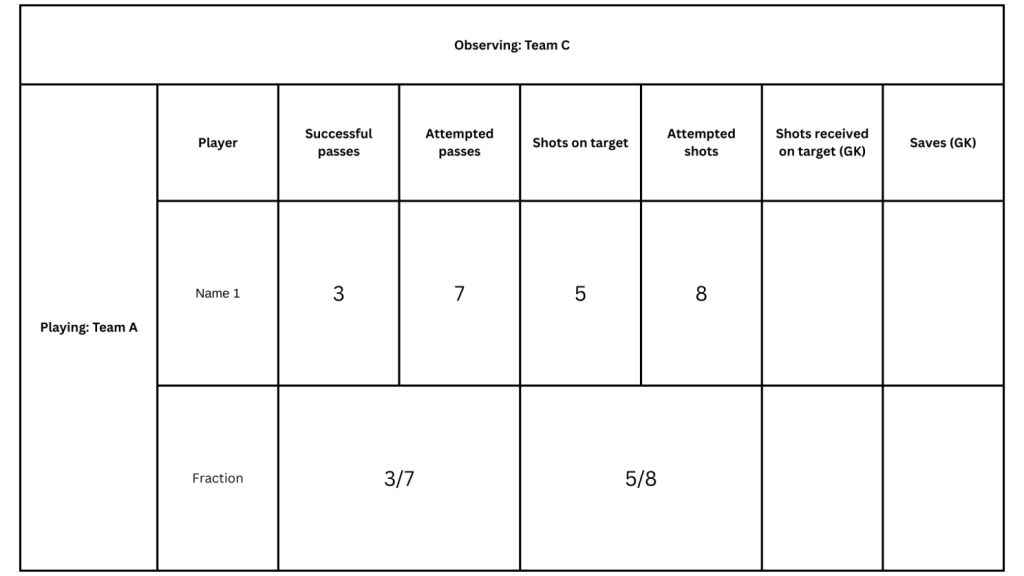
Then you can even compare fractions. For example, if player number 1 completed a fraction of 3/7 of their passes and player number 2 completed 5/9, who was more successful at passing?
Create a team statistics table by adding the data from individual players.
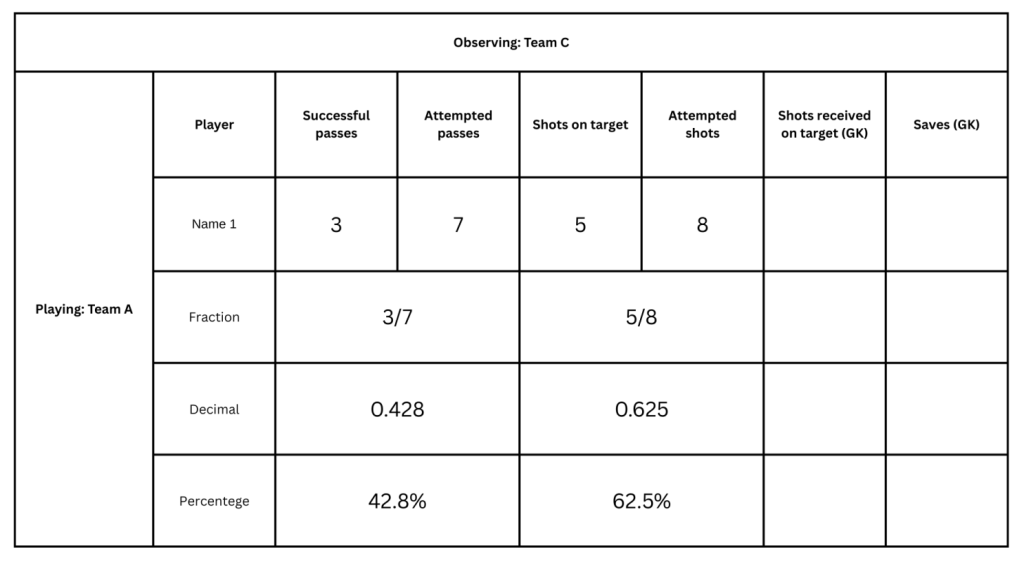
Finally, students convert all stats into bar or line graphs, comparing individual and team performance visually.
The game
It can be football, basketball, or my favorite: a Gaelic football–inspired version, which is new and inclusive.
Basic rules:
- One goalkeeper per team and four field players.
- Goalkeepers stay in the area.
- Players can pass with hands but can’t move with the ball.
- They can kick to score from outside the area.
- Field players can’t enter the goal area.
- Opponents can only intercept passes, not grab the ball from hands.
This dynamic game encourages collaboration, spatial awareness, and quick decision-making.It’s fun, accessible, and connects academic learning with motivation and agency.